
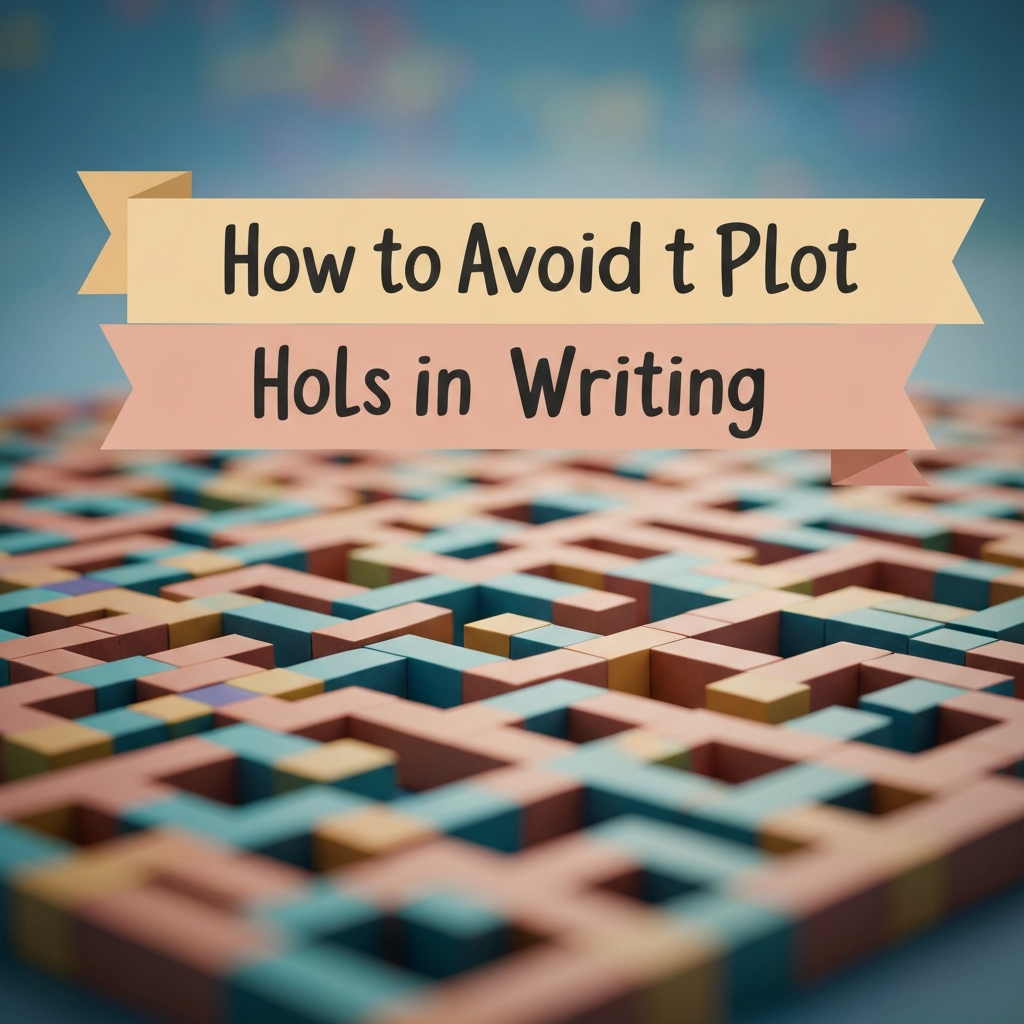
Plot holes—moments when a story’s cause-and-effect breaks down, a character acts inexplicably, or a world rule is ignored—pull readers out of the story. Good storytelling minimizes them by making every event feel earned. Below are practical techniques to avoid plot holes, paired with short examples from contemporary authors (both positive and cautionary), and a checklist you can use as you revise.
Core principles to prevent plot holes
- Lock down cause → effect: Every major plot beat should follow logically from what came before. If A happens, B must be a believable outcome.
- Define and obey your rules: Whether it’s magic, technology, or social custom, write down the constraints of your world and don’t break them unless you foreshadow how and why.
- Keep character motives consistent: A character’s choices should arise from established goals, fears, knowledge, and flaws.
- Foreshadow major reversals: If something suddenly solves a problem, plant clues earlier so the payoff feels earned rather than convenient.
- Use timelines and logistics: Distances, travel times, and resource limits matter—map them to prevent impossible sequencing.
- Test with “If/Then” and “Why” questions: If character X does Y, why would they? If X fails, what natural obstacles remain?
- Get outside eyes: Beta readers, critique partners, and editors spot blind spots you’re used to.
Concrete techniques (how to do it)
- Create a one-page “rules” document for your world and major characters.
- Make a scene-by-scene cause-and-effect log: For each scene, write “Goal — Obstacle — Outcome — Consequence.”
- Build a timeline (dates, times, travel durations) and annotate it with character knowledge (who knows what, when?).
- Use reverse outlining during revision: Summarize each chapter’s main action and motivation to check continuity.
- Plant-and-payoff map: note when you introduce a clue and where it must pay off.
- Run a “contradiction hunt”: search for places where an earlier fact conflicts with a later scene, or where a character inexplicably knows/does something they couldn’t.
Examples from contemporary authors (what to learn)
- Brandon Sanderson (Mistborn, Stormlight Archive)
- What he does well: Clearly defined magic systems with explicit limits, and frequent foreshadowing. Readers understand what can and can’t be done, so resolutions rarely feel like cheating.
- Takeaway: Explicit rules plus early setup let you use surprising solutions without creating plot holes.
- Dan Brown (Robert Langdon novels)
- Common critique: Some readers point to coincidences and improbably convenient discoveries that drive the plot forward.
- Takeaway: Relying on coincidence is risky—if a coincidence solves a major problem, add foreshadowing or an in-world mechanism to make it believable.
- J.K. Rowling (Harry Potter series)
- Example of a recurring question: Time travel and the Time-Turner in the series raised debates about consistency and the implications of altering time.
- Takeaway: If your plot uses time travel or other reality-bending devices, clearly state limits and consequences up front to avoid paradox complaints.
- Gillian Flynn (Gone Girl)
- What she does: Uses unreliable narrators and carefully constructed deception. Some readers question plausibility of sustained lies or motives, but much of the tension stems from the psychological setup.
- Takeaway: Unreliable narration can mask inconsistencies—but the characters’ motives must remain persuasive under scrutiny.
- George R.R. Martin (A Song of Ice and Fire)
- Reader concerns: Long timelines and many POVs create room for perceived continuity slips or improbable escapes.
- Takeaway: With sprawling casts, maintain a master timeline and waypoint map for character travel and scene sequencing.
Note: the above are examples of commonly discussed strengths or criticisms; debates about whether something is a true plot hole often hinge on interpretation. Use them as learning points rather than absolute judgments.
Quick revision checklist (use this on a chapter or draft)
- Does every major plot resolution follow from an established cause? If not, add foreshadowing or a credible mechanism.
- Are the world’s rules documented and consistently applied? Flag any exception and justify it on the page.
- Can any character’s choice be explained by their prior goals, fears, or knowledge? If not, revise motivation.
- Are travel times, communications, and logistics consistent across scenes? Map these if unsure.
- Does a deus ex machina solve anything? If so, rework it into a planted payoff.
- Could a reader reasonably infer hidden information (or is the reveal implausible)? If it’s implausible, seed more clues.
- Have at least two beta readers read for continuity (one detail-oriented, one focused on overall plausibility)?
Short exercises to find holes fast
- Read your manuscript looking only for “knowledge contradictions”—when a character acts like they know something they shouldn’t.
- Take a scene and strip out its emotional language; look only at the facts. Do the facts justify the scene’s outcome?
- Ask a friend: “What in this story looks like a coincidence?” If they identify a coincidence that feels critical, either eliminate or justify it.
Final thought
No story is immune to every reader’s nitpicks, but you can dramatically reduce damaging plot holes by treating your plot like a machine: sketch the parts, test the connections, and fix any loose bolts. Clear rules, consistent motives, and careful logistics make surprises feel earned instead of accidental.







Leave a Reply